Pretending to be taught my FIRST INSTRUMENT🤫😂
Warning: Undefined variable $post_id in /home/webpages/lima-city/booktips/wordpress_de-2022-03-17-33f52d/wp-content/themes/fast-press/single.php on line 26
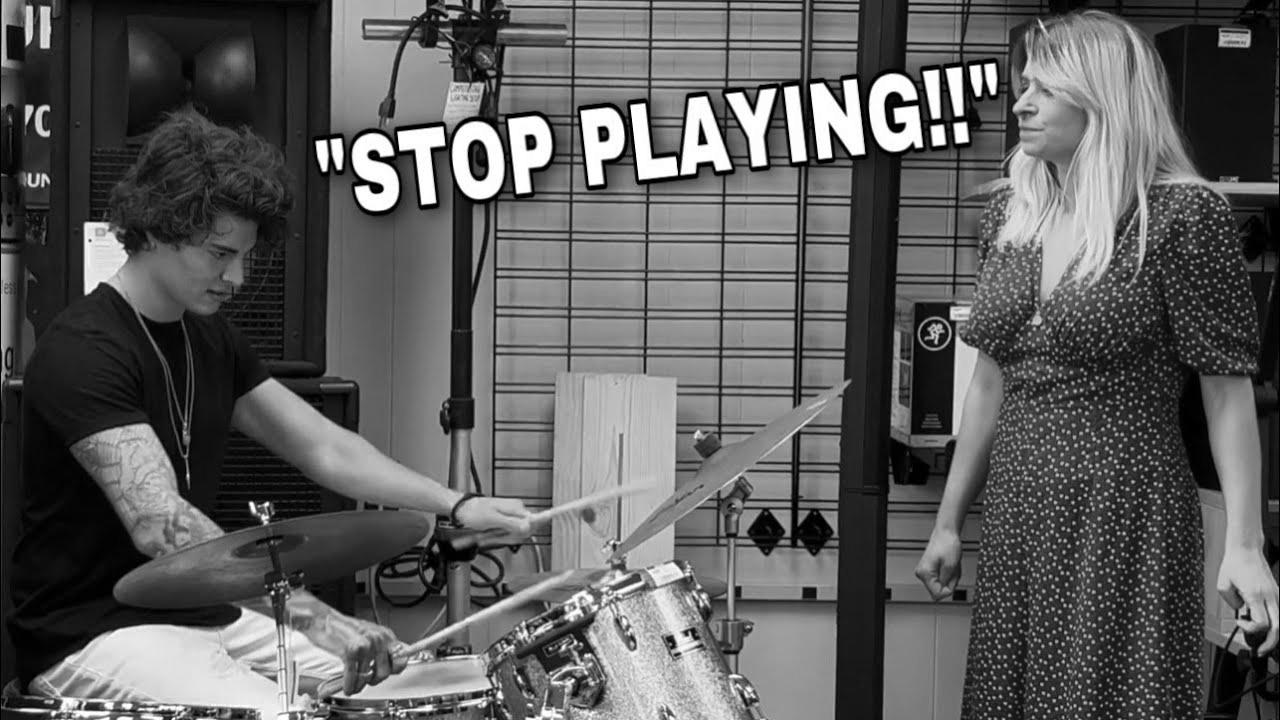
Be taught , Pretending to be taught my FIRST INSTRUMENT🤫😂 , , TD4v5SCXPuU , https://www.youtube.com/watch?v=TD4v5SCXPuU , https://i.ytimg.com/vi/TD4v5SCXPuU/hqdefault.jpg , 44217836 , 5.00 , Please SUBSCRIBE for PART 2!!! - Hey guys! For those who favored this video, please subscribe and provides a thumbs up. Take a look at more ... , 1649259566 , 2022-04-06 17:39:26 , 00:00:57 , UCf3kwhq3S43ipiUYwfGV_bw , Jon Dretto , 2875419 , , [vid_tags] , https://www.youtubepp.com/watch?v=TD4v5SCXPuU , [ad_2] , [ad_1] , https://www.youtube.com/watch?v=TD4v5SCXPuU, #Pretending #study #INSTRUMENT [publish_date]
#Pretending #study #INSTRUMENT
Please SUBSCRIBE for PART 2!!! - Hey guys! If you happen to favored this video, please subscribe and give a thumbs up. Try more ...
Quelle: [source_domain]
- Mehr zu learn Education is the physical entity of exploit new understanding, knowledge, behaviors, profession, belief, attitudes, and preferences.[1] The cognition to learn is demoniac by human, animals, and some equipment; there is also show for some kinda learning in convinced plants.[2] Some encyclopedism is straightaway, evoked by a single event (e.g. being hardened by a hot stove), but much skill and cognition roll up from repeated experiences.[3] The changes spontaneous by learning often last a lifespan, and it is hard to characterize conditioned stuff that seems to be "lost" from that which cannot be retrieved.[4] Human learning begins to at birth (it might even start before[5] in terms of an embryo's need for both interaction with, and exemption inside its situation within the womb.[6]) and continues until death as a result of on-going interactions 'tween populate and their environs. The trait and processes active in education are studied in many established comic (including informative scientific discipline, psychology, psychological science, psychological feature sciences, and pedagogy), also as emergent fields of noesis (e.g. with a common fire in the topic of eruditeness from guard events such as incidents/accidents,[7] or in collaborative encyclopedism health systems[8]). Investigate in such comedian has led to the identity of varied sorts of education. For example, encyclopaedism may occur as a outcome of dependency, or conditioning, conditioning or as a result of more interwoven activities such as play, seen only in comparatively agile animals.[9][10] Encyclopaedism may occur consciously or without conscious consciousness. Encyclopedism that an dislike event can't be avoided or on the loose may result in a state called learned helplessness.[11] There is bear witness for human behavioural encyclopedism prenatally, in which habituation has been discovered as early as 32 weeks into mental synthesis, indicating that the central queasy organisation is insufficiently formed and primed for eruditeness and faculty to occur very early in development.[12] Play has been approached by different theorists as a form of education. Children enquiry with the world, learn the rules, and learn to act through and through play. Lev Vygotsky agrees that play is crucial for children's maturation, since they make pregnant of their environment through and through performing educational games. For Vygotsky, nevertheless, play is the first form of encyclopaedism terminology and human action, and the stage where a child started to understand rules and symbols.[13] This has led to a view that learning in organisms is e'er associated to semiosis,[14] and often related to with representational systems/activity.
Alright here is what we are going to do. Wear a dress and act like your the sales lady. Action.
Wow…so authentic and believable 😂
FAAAAAAAAAAAAAAAKE!!!!!!!
If these people were actually musicians they would have clued by the way he picked up the instruments. The place people grab it always tells.
The camra man be like :👻 im not here
that cameraman must have drank some kind of invisibility potion
Very good guitaring
Gtfo with this fake shit
How much for private lessons from the teacher lady? Asking for a friend 😆
Fucking amazing
The third person 😂 be like 😜🤪
So they not gonna question the camera man or is he invisble
🤣🤣🤣
I only liked because the end bit sounded sick 💀
You put a good prank on them
Wow
It's her response in the end
👎🏼
“John Cena must be happy to be his cameraman”
This is that "oh son help mommy is stuck in the dryer " porn
Yo, I've never been greeted when walking into a music store.
Obnoxious showboating
"Can we all comment yes?"
"Yes"
Why do women lie so much?
Love this!
Lol
Jesus Christ this sucks
Mondo cringe